

Main image: illustrative website architecture concept, not a client project
A business website price becomes useful when you can see the work behind it. Before comparing totals, check whether each proposal covers the same pages, languages, content responsibilities and functionality, then separate the build fee from the services you will keep paying for after launch
For a company in Egypt, that gives you a clearer starting point than a broad market price range. This guide uses ADAMS prices published on our own service pages, checked on 29 October 2026, and a practical way to read the scope behind any proposal
What current ADAMS website prices refer to
Our website design page lists the following one-off build prices and scope boundaries
| Website scope | Build fee | Key boundary |
|---|---|---|
| Starting offer | From EGP 9,999 | Separate written scope |
| Business | EGP 15,000 | Up to five standard pages, one language |
| Bilingual | EGP 28,000 | Up to eight standard pages per language, Arabic and English |
| Ecommerce | From EGP 45,000 | Store scope with up to five content pages and 30 simple products |
These are ADAMS fees, not an Egyptian market average. The starting offer is not the five-page Business plan under a different name. Copywriting, translation, hosting, domains, paid licences and ongoing maintenance are separate from the build; applicable taxes and external costs are excluded. Check the service page and your written proposal for full inclusions and exclusions
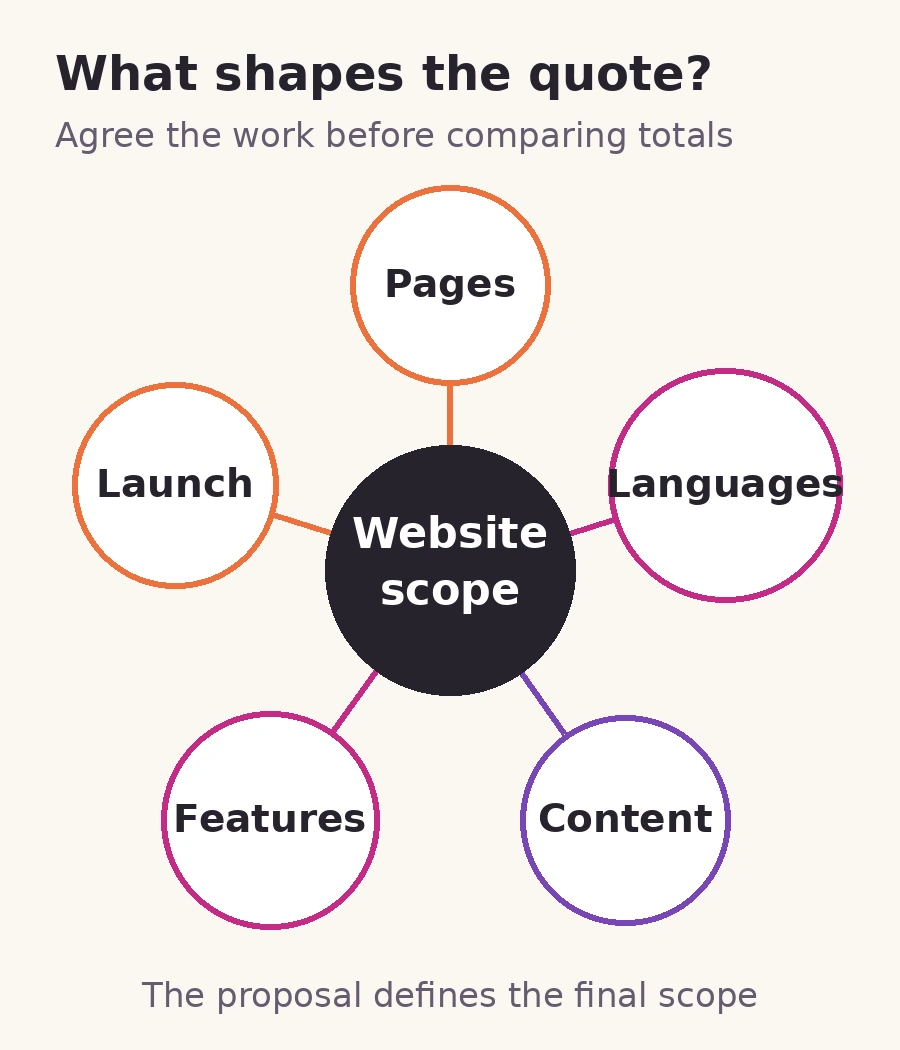
A page count is only part of the scope
Ask what each page must help a visitor understand or do. A short company introduction, a detailed service explanation and a searchable catalogue can each be described as a page, while requiring very different content and functionality
For an illustrative comparison, consider a company that only needs to explain its services and receive enquiries, alongside one that needs visitors to choose a product, pay online and arrange delivery. Compare their required journeys before comparing the number of pages. The second brief introduces transactions and operational requirements that a page count alone will not explain
Turn broad requests into decisions a provider can price: which services need their own pages, what information must be searchable, what a form must collect and whether anything needs to connect to another system. Ask what is standard, what needs configuration and what requires additional development
If you are unsure whether a missing explanation needs its own page, our guide to service pages and blog posts helps distinguish a service decision from a supporting question. That is a content choice to resolve before requesting more pages
Two languages add a content and testing responsibility
Agree which content appears in each language, who prepares and approves the translations, and how visitors move between matching pages. Arabic and English layouts also need to work with their respective reading directions, real text lengths, navigation and contact forms
Google recommends separate URLs for different language versions and links that let users choose the other version. Include the language structure in the brief rather than treating a language switch as the whole requirement
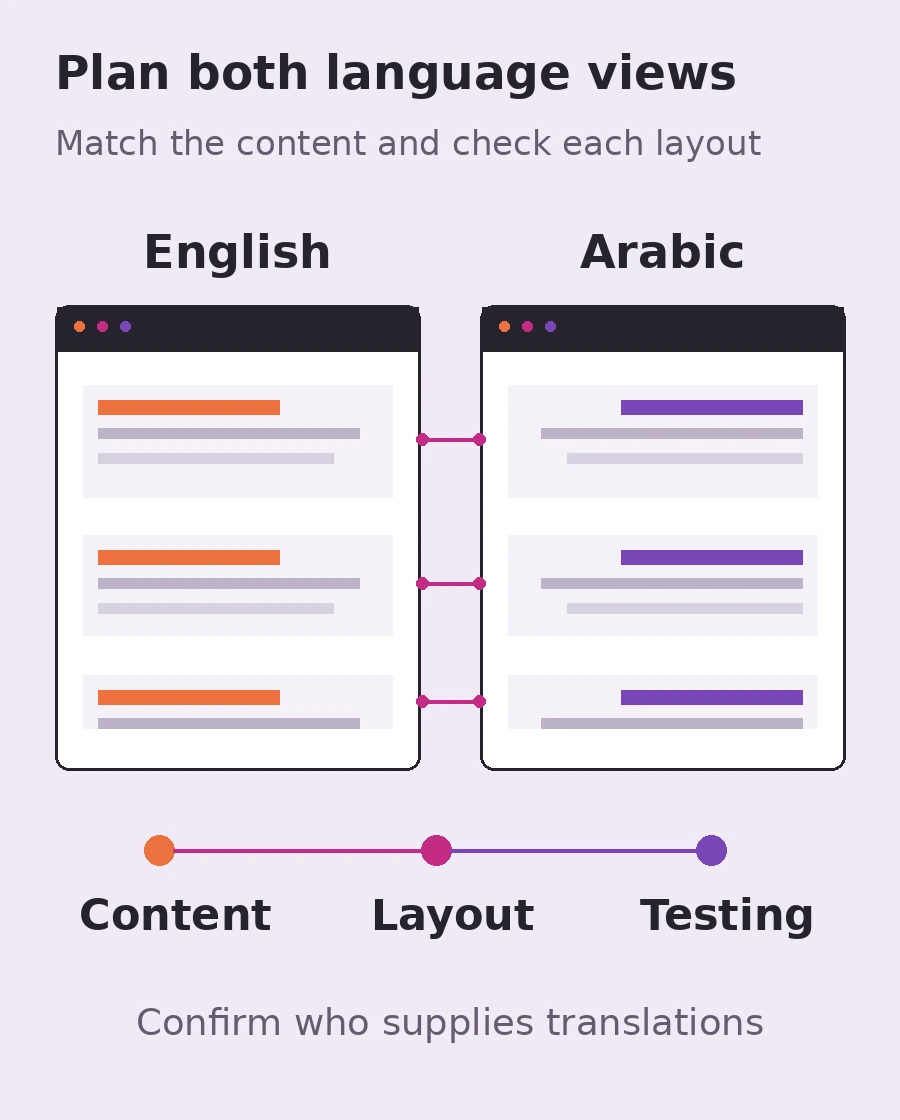
The ADAMS Business and Bilingual plans differ in both language coverage and page allowance. Their price difference should not be read as a standalone translation charge. Ask separately about content production and translation responsibilities, then confirm the actual scope of your project
Separate the build from the costs of running the website
Read the proposal in three parts: the initial project, continuing services and later changes. This prevents a one-off build fee from being mistaken for the full cost of keeping the website available and useful
- Initial project: the agreed planning, design, build and launch work, with content production or migration identified where needed
- Continuing services: hosting, domain renewal, any paid software licences and the maintenance you agree to use, each with its own billing period
- Later changes: additional pages, new integrations or content work commissioned beyond the agreed scope
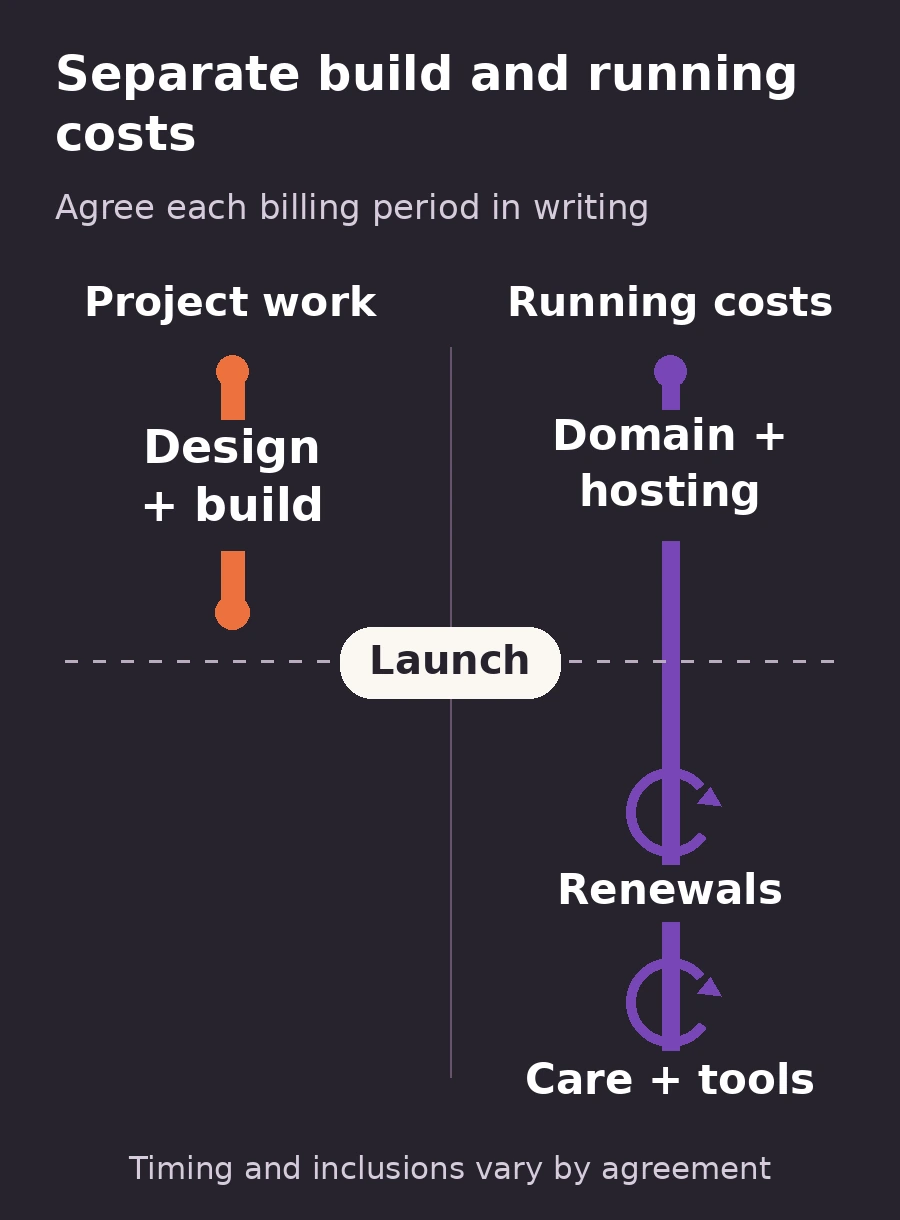
ADAMS Business Hosting is currently EGP 6,500 per year, paid upfront, for one company website. It includes one standard .com registration or renewal for the paid year and up to ten business email accounts; website files, databases and email share the total 10 GB storage allowance
That included domain should not be added again as a separate standard-domain charge. Premium domains, other extensions and additional services are separately scoped. WordPress care is optional and separate: the base Website Care plan is EGP 1,500 per month and does not include editing or development hours. Hosting, DNS and email configuration support is already part of Business Hosting
Confirm renewal dates and the amount due before renewal; today’s price is not a promise that future charges will stay unchanged. Ask who keeps the renewal record and who authorises payment
Make the less visible work explicit
A proposal can look complete while leaving important tasks unassigned. Who turns your service information into final copy? Who chooses and prepares images? Who checks the translated wording? If those inputs come from your company, name the owner and check that the material is ready
Read support terms with the same care. The Business, Bilingual and Ecommerce plans include two revision rounds and 30-day defect support; that does not describe an ongoing maintenance or content-editing service. Ask how a defect is distinguished from a new request, which checks define acceptance and what happens when you want to change the site later
Basic page titles and descriptions are also different from a continuing SEO programme. Agree what the launch setup actually includes, which accounts and assets are handed over, and who handles future updates and paid licences. A phrase such as “SEO included” needs a defined list of work before it can be compared usefully
Compare proposals against the same questions
Use the same scope questions for each provider, then mark each answer as included, excluded or still unclear. Avoid filling gaps with assumptions simply because the headline total looks attractive
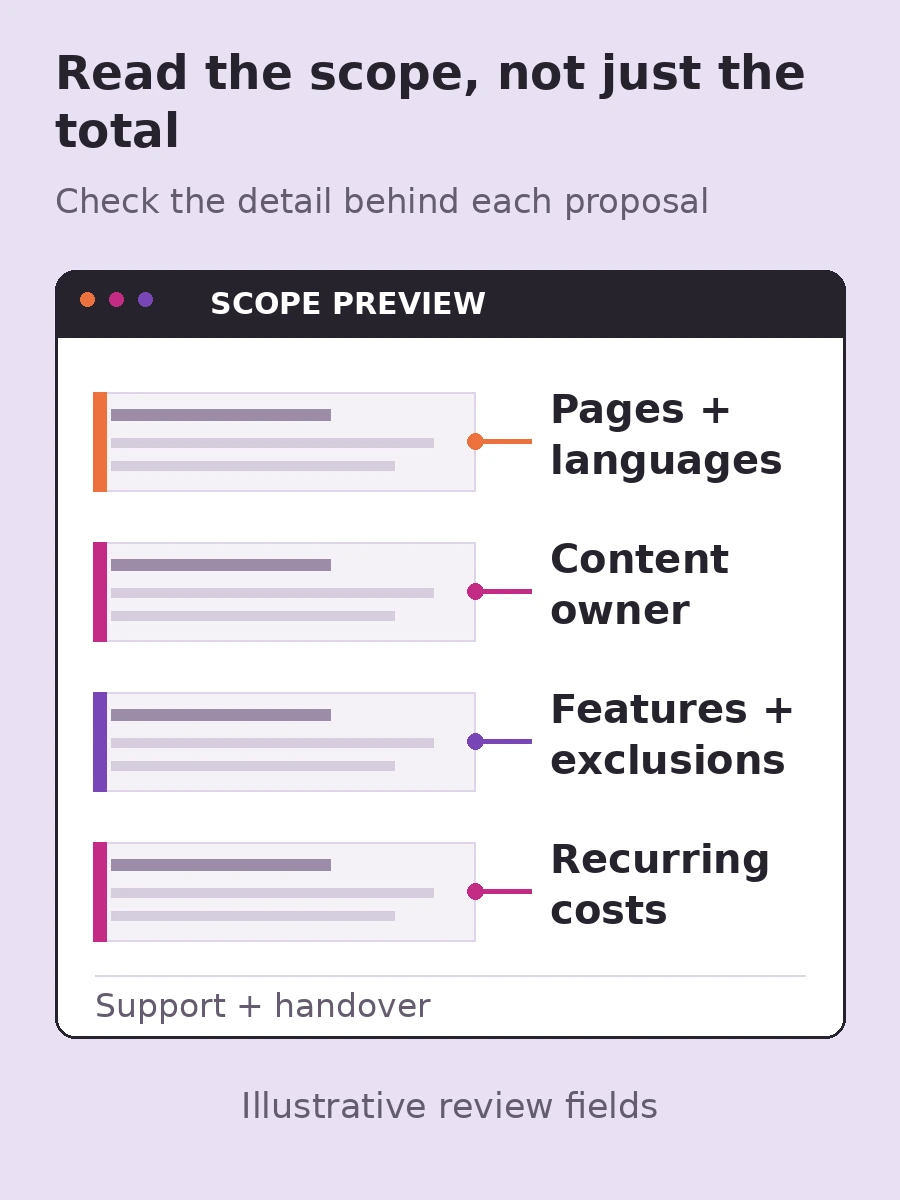
- Pages and languages: which named pages and language versions are included?
- Content: who supplies, writes, translates, reviews and uploads each asset?
- Functionality: what must a visitor be able to do, and which integrations are agreed?
- Running costs: what renews, when is it billed and what is already bundled?
- Review and launch: who approves the work, what is tested and what counts as complete?
- Handover and support: what access and files are delivered, and where does ongoing work begin?
If the proposals describe different work, ask for the scope to be aligned before judging the totals. You may discover that a smaller initial project meets the immediate need, while a future feature can be quoted when its requirements are clear. Keep the omitted work visible so it is a conscious decision
Ask for a price attached to a defined project
Send the page list, languages, required functions, content you already have and the person who can approve the project. For an existing site, add the current address and what needs to change; our website redesign brief can help you organise that information
Discuss your website scope with ADAMS so the proposal can separate the build, your inputs, continuing services and any additional work. You should leave the conversation knowing what the price covers and which decisions still need an answer