

Main image: concept illustration of different website page roles, not a client website or an actual project
Your website may have a busy blog and still leave a buyer unsure what your business actually offers. It may also explain its services clearly while leaving important questions unanswered. Those are different gaps, and publishing the same kind of page for both can make the site harder to use
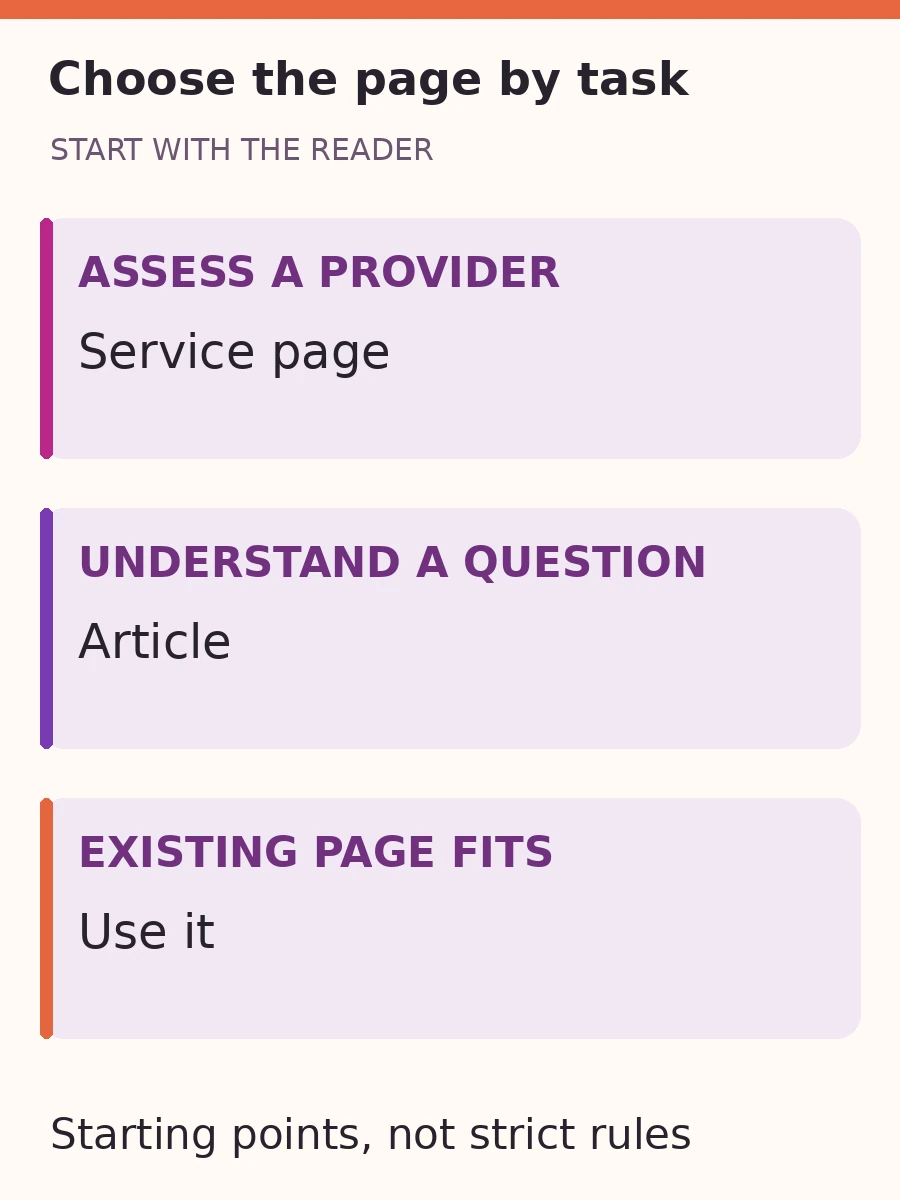
When choosing between service pages and blog posts, start with the job the next page needs to do. Is someone assessing a provider, trying to understand a specific issue or looking for information that already exists on your site? The answer helps you decide whether to improve a page, create a service destination or write an article
Start with the visitor’s task before choosing a page type
A service page gives people a place to assess a particular offer. A blog post can give a question or decision the room it needs. These are useful starting points, rather than strict boundaries: service pages can educate, and a helpful article can lead someone towards an enquiry
Write down the task in plain language. “Find a provider who supports this type of equipment” suggests a different page from “Understand what information a provider needs before discussing the work”. Both may relate to the same service, but the reader needs a different kind of answer
Then look at several relevant search results for the language and market you serve. Open the pages and examine what they actually provide: a service description, a comparison, an explanation or another format. Treat that as evidence of what is currently being surfaced, alongside customer conversations and your own site information
A results page does not reveal every searcher’s intention or supply a guaranteed ranking formula. Some searches have mixed needs, and the results can change. Google’s explanation of how Search works also notes that relevance can depend on factors such as location, language and device
What belongs on a useful service page?
Give a prospective customer enough information to judge whether a conversation is worthwhile. A service name and a contact button leave much of that work to the visitor. Explain the offer using facts your business can confirm
- Scope: the work the service includes, with relevant limits and exclusions
- Suitability: the customers, situations or requirements it can support
- Process: what happens when someone enquires and what the business needs to assess the request
- Evidence: permitted examples, accurate demonstrations or other material that supports the claims being made
- Next step: a clear contact route and an honest explanation of what happens afterwards
The useful details depend on the service. Coverage may matter for work delivered at a customer’s premises; supported systems may matter for a technical service; client inputs may matter for a creative project. Include what helps the reader assess fit, and avoid filling gaps with promises the business has not agreed
Brief answers to common questions can belong here too. If a concise explanation resolves a concern about the offer, keep it close to the relevant service information. The presence of an educational paragraph does not turn a service page into the wrong format
Review the route from interest to contact as part of the page. A visitor should be able to understand the service and find the next action on a phone. If people reach the site but do not get in touch, check the enquiry journey before assuming that a larger publishing schedule will solve the problem
What should a blog post add?
A worthwhile article resolves a distinct question, comparison or decision with enough detail to help the reader. It can explain a concept, clarify a trade-off or prepare someone for a useful conversation. Its value comes from the answer, not from being filed under News or Blog
For example, an article can explore the information needed to prepare a project discussion, while the service page explains the offer itself. The article should answer its question directly, even if the reader is not ready to enquire. A relevant service link can then offer a next step without replacing the explanation
Google’s people-first content guidance asks whether content helps its intended audience achieve a goal and provides worthwhile information. It does not prescribe a preferred word count. Give a subject the space it needs, rather than expanding a small answer to meet an imagined SEO requirement
Before commissioning an article, ask what it will add beyond the current service page. If the proposed draft mostly repeats the offer, process and contact information, clarify its purpose first. A genuinely separate question may deserve its own treatment; a missing paragraph may simply belong on the page you already have
An example: one service, different information needs
Consider a generic industrial equipment maintenance business. This is an illustrative website-planning example, not an ADAMS client, a real service specification or a claim about search demand
The service destination helps a buyer assess fit
A page titled “Industrial equipment maintenance” could explain the equipment and work the business actually supports, its confirmed coverage, relevant exclusions and the enquiry process. Those facts must come from the provider. The page should not invent capabilities or response deadlines because a competitor mentions them
A supporting article answers a more detailed question
An article titled “What information helps a maintenance provider assess an enquiry?” could explain how to describe the request and organise information already available to the customer. It might distinguish the equipment type, the work being discussed and the context the provider needs, subject to the provider’s review
The scope here is preparing a conversation, not giving repair instructions. Any examples would need to reflect the actual service and avoid exposing confidential customer information. The reader should finish understanding what to discuss, without being asked to perform technical work to complete an enquiry
A short answer may still belong on the service page
If the business only needs customers to send a brief description through its contact route, that instruction may fit comfortably on the service page. A separate article earns its place when there is a fuller, distinct explanation to provide. Do not create a new URL merely because a question can be turned into a title
Link the pages where the next step is useful
The service page can point to an article when a reader needs more explanation before proceeding. The article can point to the relevant service when a reader wants to assess the offer. Add either link where it helps; reciprocal linking is not a requirement for every pair of pages
Choose link text that describes the destination. In the illustrative example, “information to prepare before an enquiry” makes a different promise from “equipment maintenance service”. The surrounding sentence should explain why the destination is useful at that point
Google’s link best practices recommend descriptive, concise and relevant anchor text, together with links that can be crawled. The same guidance encourages contextual links to useful pages on your own site. There is no ideal link quota to fill
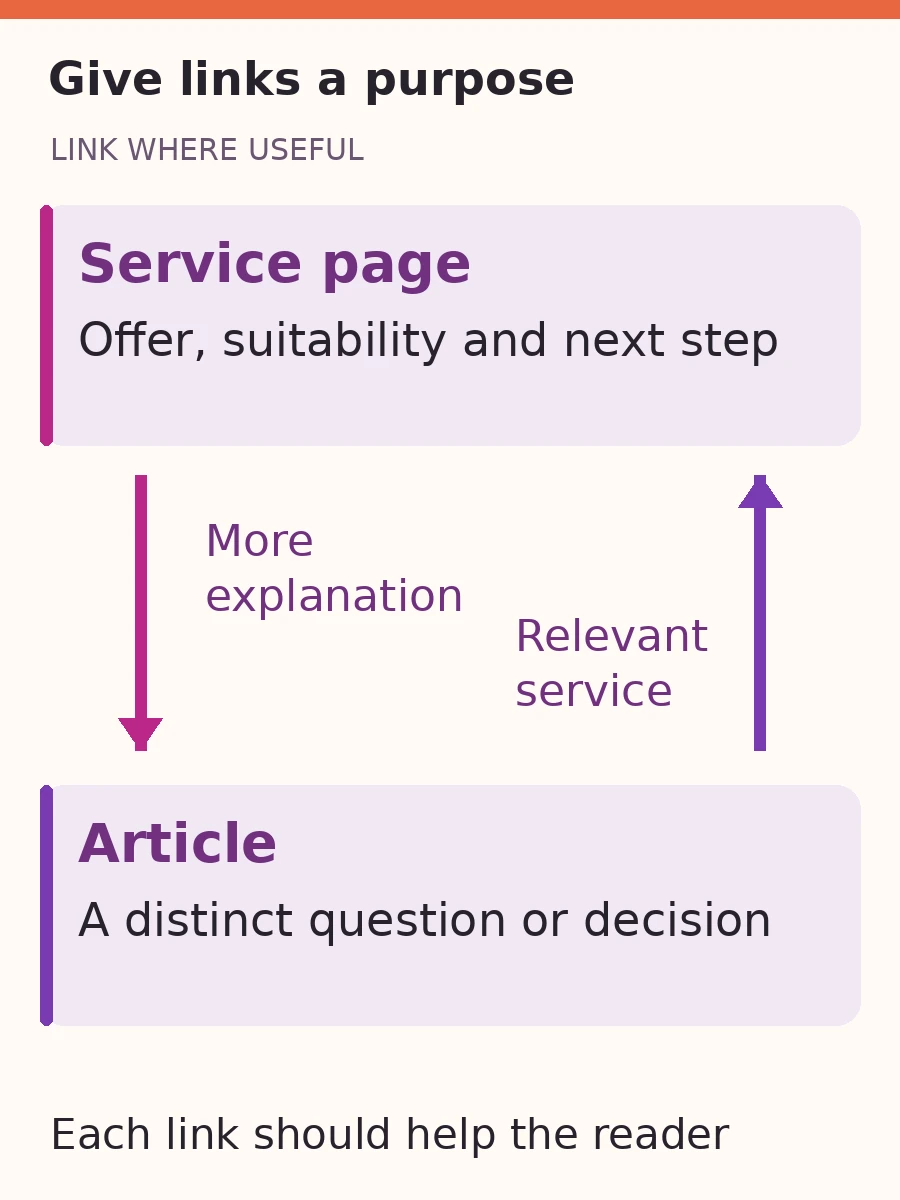
Keep the important explanation in readable page text. A diagram can clarify the relationship, but it should not be the only place someone can find the answer. Check that each link opens the intended live page and that the destination matches its description
Improve an existing page before adding another with the same job
Two pages mentioning the same phrase are not automatically a problem. A service page and an article can cover related ground while answering different needs. What deserves review is a pair of pages that make essentially the same promise and leave visitors unsure which one to use
Compare the titles, main content, intended audience and next action. If you cannot explain the difference plainly, review the proposed page before publishing it. That may mean sharpening the article’s question, improving an existing page or planning a consolidation with the appropriate technical checks
Do not remove a live URL simply because another page uses similar words. Existing pages may receive useful visits or links, and changes need a considered plan. If you are reviewing the structure more widely, prepare a page inventory and URL decisions before making structural changes
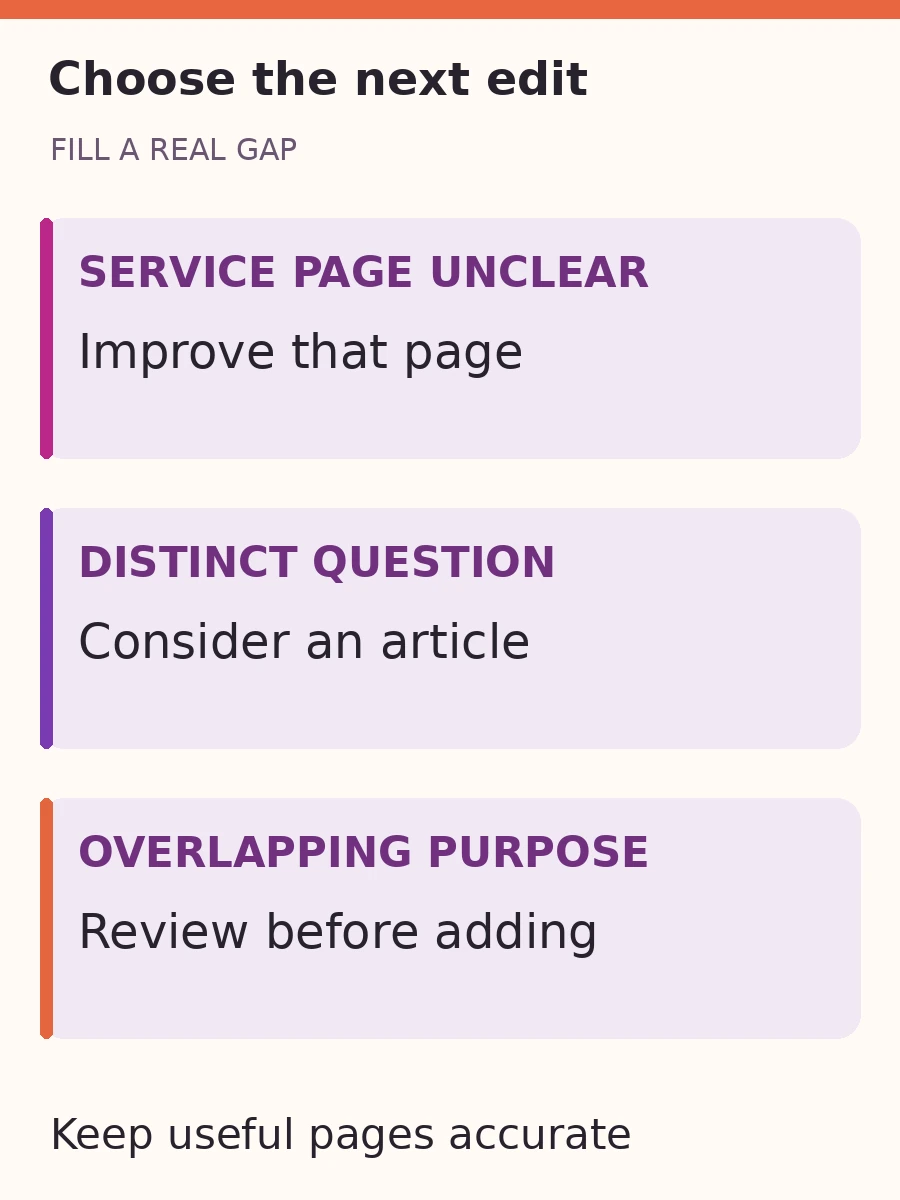
Decide what your website needs first
If people need scope, suitability and contact information that the site does not clearly provide, improve or create the relevant service destination. If that destination works but a distinct question needs a fuller answer, plan an article. If a current page already answers the need well, use it and keep it accurate
Review each page against its purpose after publication. A service page can be checked for clear scope, usable contact routes and the information that arrives with enquiries. An article can be reviewed for whether its explanation resolves the question and whether its next-step links are useful. Neither page type guarantees traffic or enquiries
Google also makes clear that following its guidance does not guarantee crawling, indexing or appearance in results. Choose a useful page for your audience, then give it clear content, relevant links and a usable experience. Assess the result using available evidence rather than the page label alone
If you need help choosing the next content improvement, explore SEO with ADAMS. Start with the pages you have and the decisions your customers need to make, so the next piece of work fills a clear gap